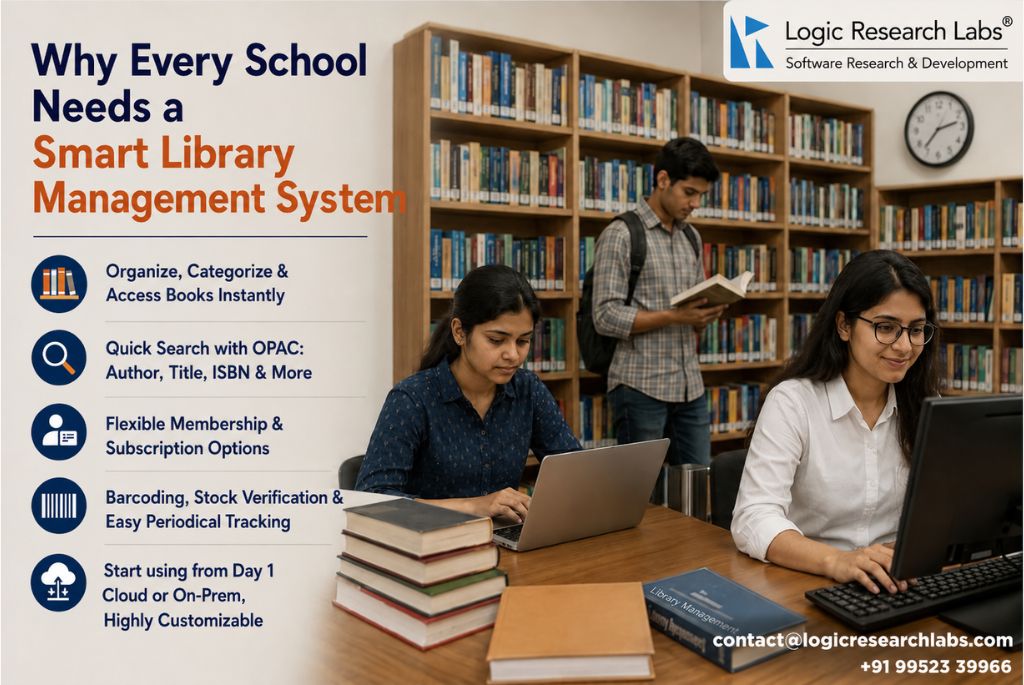
Explore why schools are adopting smart library management systems. Learn how OPAC, automation, barcoding, and digital catalogs enhance learning and efficiency.
The Changing Landscape of School Libraries
School libraries are evolving from traditional book storage spaces into digital learning hubs. With the rise of e-learning, hybrid classrooms, and digital resources, manual library management is no longer sufficient. Schools face challenges such as lost books, inefficient membership handling, and difficulty tracking journals and periodicals.
A Smart Library Management System (SLMS) addresses these challenges by digitizing workflows, improving access, and enhancing student learning experiences.
1. Future-Ready Student Membership Management
Modern schools need to manage hundreds or thousands of student memberships efficiently. A smart system provides:
- Automatic student enrollment and membership ID cards
- Tracking of subscriptions and fees
- Alerts for membership renewals
- Easy integration with school management systems
By automating these tasks, schools save administrative time and reduce errors, creating a seamless library experience for students.
2. Digital Cataloging and OPAC for Instant Access
In today’s fast-paced learning environment, students and teachers require quick access to books and digital resources.
Features include:
- OPAC (Online Public Access Catalog) for fast searches by Author, Title, ISBN, Publisher, Keyword, or Year
- Digital cataloging for books, e-books, and multimedia resources
- Real-time availability updates to minimize waiting time
This ensures that students spend more time learning rather than searching.
3. Barcoding and Automated Inventory Management
Tracking library materials manually is prone to errors. SLMS introduces:
- Barcode-based issuing and returns
- Automated inventory checks and stock verification
- Reports for lost, damaged, or missing books
With barcoding, library staff can manage resources efficiently, and students enjoy faster service.
4. Periodicals and Subscription Management
Schools are increasingly providing access to digital and print periodicals. A smart system helps:
- Track volumes, issues, and subscriptions
- Manage publisher payments efficiently
- Maintain an accessible archive for students and teachers
This ensures that educational institutions stay updated with academic and research resources, improving learning outcomes.
5. Cloud-Based and Remote Access for Hybrid Learning
Cloud-based SLMS allows libraries to function anytime, anywhere, which is essential in the era of hybrid and online learning. Benefits include:
- 24/7 remote access for students and faculty
- Secure data storage and backups
- Multi-device accessibility for tablets, laptops, and smartphones
- Advanced analytics and reporting for administrators
6. Benefits Beyond Efficiency
Implementing a smart library management system provides:
- Enhanced student engagement through faster access
- Time-saving for library staff
- Future-ready infrastructure for digital learning trends
- Data-driven insights to improve library services continuously
Schools that adopt SLMS are positioning themselves as leaders in educational innovation, ready to meet the needs of 21st-century learners.
Transform Your School Library Today
A Smart Library Management System is no longer optional—it’s a necessity. With features like automated membership, OPAC, barcoding, periodicals tracking, and cloud access, schools can future-proof their libraries, enhance student learning, and streamline operations.
Call to Action
👉 Enquire now for a Free Demo of the Best Library Management System for Schools and Colleges!


