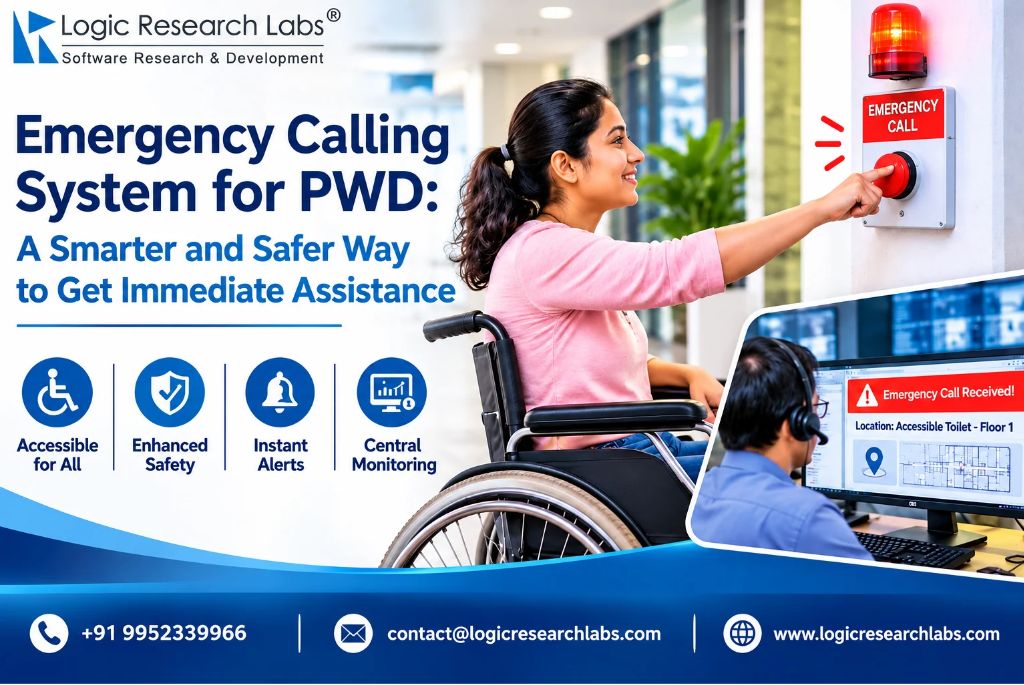
For persons with disabilities (PWD), getting immediate assistance during an emergency can sometimes be difficult. Traditional emergency communication methods may not be accessible to everyone, especially for people with mobility, hearing, speech, or other physical limitations.
An Emergency Calling System for PWD (Persons with Disabilities) provides a simple and accessible way to request assistance when it is needed. With strategically installed emergency call buttons, wireless devices, visual indicators, and centralized alerts, organizations can create a safer and more inclusive environment.
Whether it is used in a Public Facility, Hotel, Residential Environment, Offices, Education Institution, Government Building, Hospitals, an accessible emergency calling system can help ensure that assistance reaches the person quickly.
What Is an Emergency Calling System for PWD?
An Emergency Calling System for Persons with Disabilities is an assistive communication solution designed to allow individuals to send an emergency or assistance request without relying on conventional communication methods.
Depending on the environment and requirements, the system can include:
- Emergency call buttons
- Wireless emergency call devices
- Pull-cord or accessible call units
- Nurse or attendant call integration
- Visual and audible alerts
- Central monitoring displays
- Call acknowledgement
- Location-based emergency identification
- Event logging and reporting
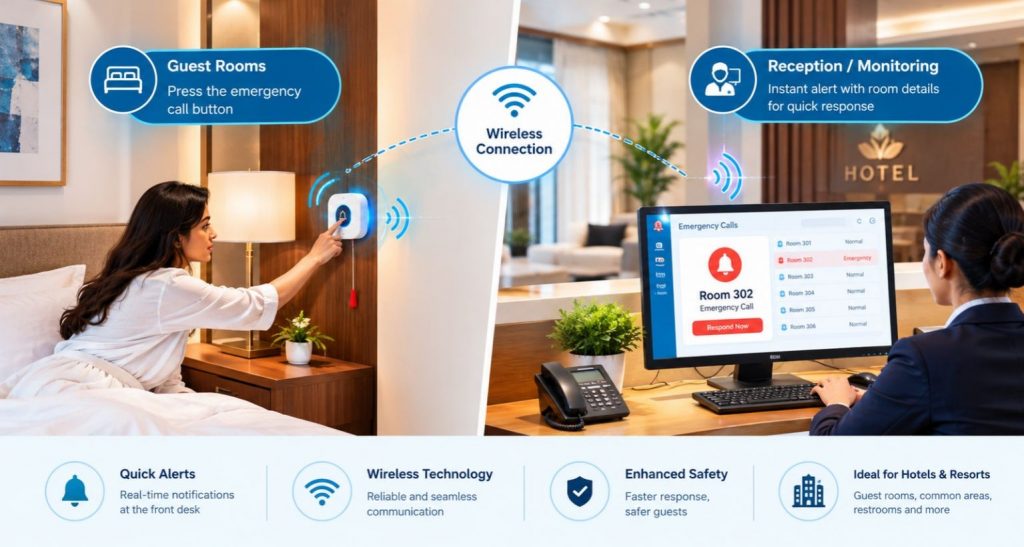
When a PWD person activates the emergency device, the emergency system can immediately notify the responsible control station or staff member.
The objective is simple: make it easier for a person with a disability to request help when they need it most.
Why Is an Emergency Calling System Important for PWD?
Accessibility is not limited to ramps, elevators, accessible toilets, or reserved parking spaces. Communication and emergency response are also important parts of an inclusive environment.
A person with limited mobility may not be able to reach a telephone quickly. A person with a speech or hearing disability may face difficulties using conventional voice-based emergency communication.
An accessible emergency call system provides an alternative method to communicate a need for assistance.
Faster Access to Assistance
In an emergency, every second can matter.
A dedicated emergency call button allows the user to initiate an alert immediately without searching for a telephone or navigating a complicated interface.
Greater Independence
PWD-friendly emergency systems can help individuals request assistance independently.
Instead of depending on another person to identify that help is required, the user can activate the emergency call device themselves.
Improved Accessibility
Emergency communication should be designed around different user requirements.
Depending on the implementation, systems can provide:
- Large and easily identifiable buttons
- Accessible mounting positions
- Visual alerts
- Audible notifications
- Wireless operation
- Simple activation mechanisms
Clear Identification of the Emergency Location
A centralized system can display information about where the call originated.
For example:
Emergency Call – Accessible Toilet – Ground Floor
This can help staff understand the location before approaching the person.
Better Emergency Response Management
A centralized emergency calling system can help staff manage multiple alerts from different areas.
Calls can be displayed, acknowledged, attended, and recorded, providing better visibility into emergency response activities.
How Does a PWD Emergency Calling System Work?
The basic operation is straightforward.
Step 1 – Emergency or Assistance Required
A person requires immediate assistance.
Step 2 – Call Activation
The user presses an emergency call button or activates an accessible emergency device.
Step 3 – Alert Generation
The system sends the emergency request to the designated monitoring point.
Step 4 – Staff Notification
Staff receive an audible, visual, or digital notification.
Step 5 – Location Identification
The system identifies the location or device from which the emergency call originated.
Step 6 – Assistance Provided
The responsible staff member reaches the location and assists the person.
Step 7 – Call Acknowledgement / Reset
After the situation is handled, the call can be acknowledged or reset according to the system configuration.
This simple workflow can significantly improve the way emergency assistance is requested and managed.
Key Features of an Emergency Calling System for Persons with Disabilities
A modern emergency calling solution can be customized according to the requirements of the facility.
Emergency Call Button
A dedicated button provides a simple method for requesting assistance.
The button can be installed at an accessible height and location.
Wireless Emergency Calling
Wireless devices can be useful where running new cables is difficult or where users require mobility.
Depending on the system, wireless call devices can be installed in different areas and connected to a centralized monitoring system.
Visual and Audible Alerts
Combining visual and audible notifications can make emergency alerts more accessible.
For example:
Red indicator + audible alert + location displayed on monitor
This provides multiple ways for staff to recognize an incoming emergency call.
Centralized Monitoring
A central monitoring station can display active emergency calls and their locations.
This can be particularly useful in large buildings with multiple floors or departments.
Call Acknowledgement
Staff can acknowledge an incoming emergency call so that the control station knows the alert has been received.
Call History and Reporting
Call records can provide useful information such as:
- Call location
- Call time
- Acknowledgement time
- Response time
- Call status
- Reset time
This information can help organizations review emergency response performance.
Where Can PWD Emergency Calling Systems Be Used?
An accessible emergency calling system can be deployed in many environments.
Hospitals and Healthcare Facilities
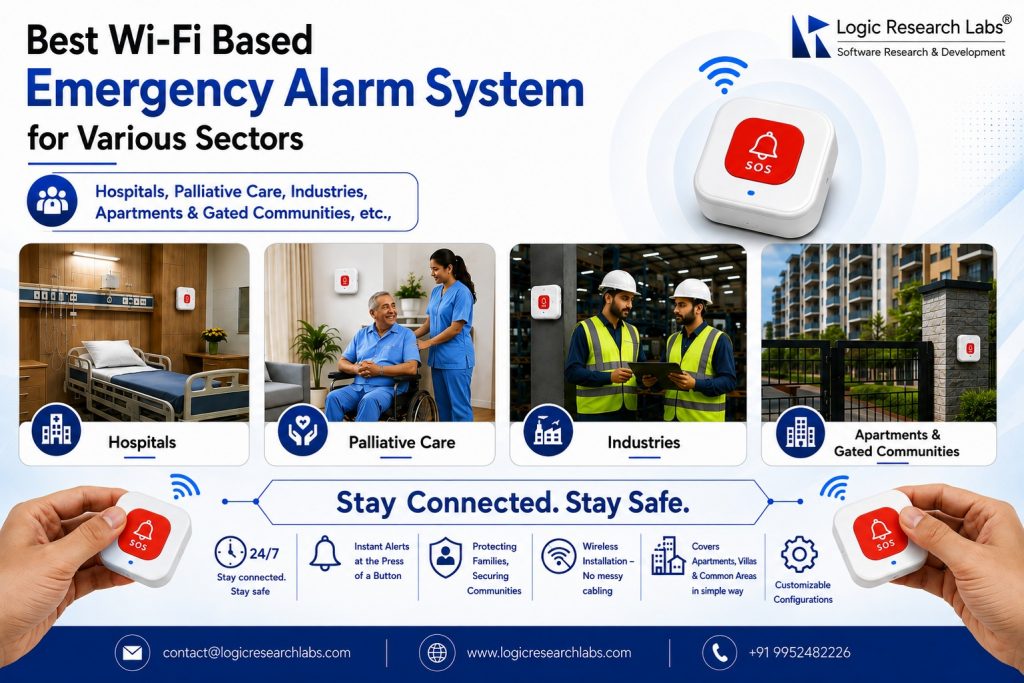
Hospitals can use emergency call systems in accessible toilets, patient rooms, wards, waiting areas, and other locations where patients may require assistance.
Government Buildings
Government offices and public service centers can provide accessible emergency communication facilities for visitors and employees with disabilities.
Educational Institutions
Schools, colleges, universities, and training centers can use emergency call systems as part of their accessibility and safety infrastructure.
Corporate Offices
Accessible workplaces can incorporate emergency call devices in designated areas to improve employee and visitor safety.
Hotels and Hospitality Facilities
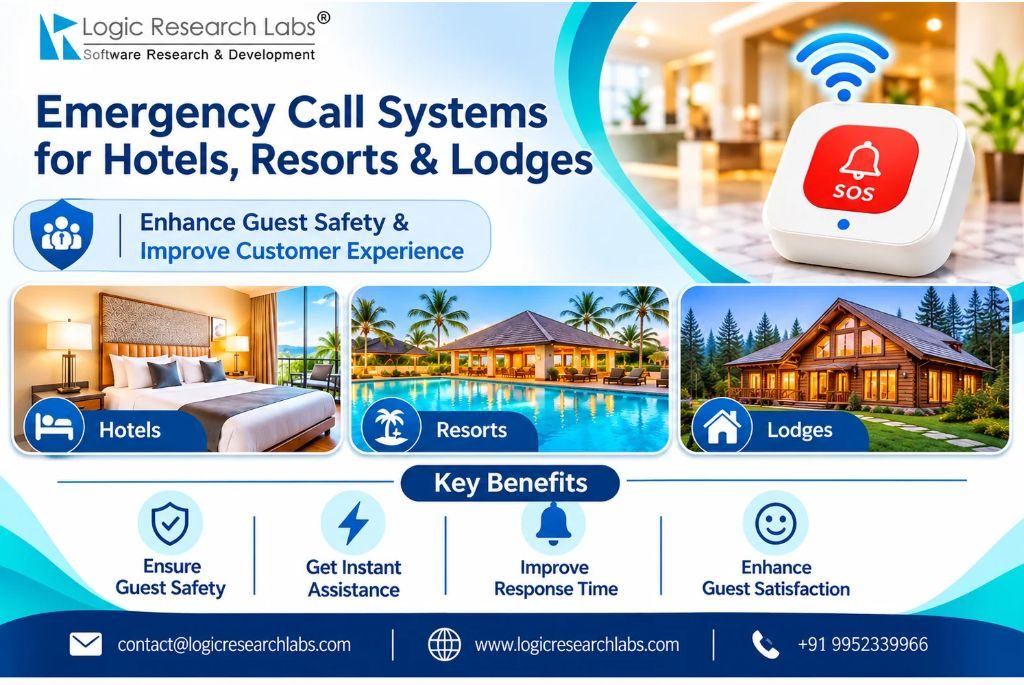
Hotels can install accessible emergency call devices in rooms, bathrooms, and common areas designed for guests with disabilities.
Public Buildings
Libraries, railway facilities, shopping centers, community buildings, and other public facilities can benefit from accessible emergency communication.
Emergency Calling System vs. Conventional Emergency Communication
Traditional emergency communication often depends on telephones, intercoms, or verbal communication.
For some users, these methods may not always be convenient or accessible.
An emergency calling system provides a dedicated mechanism designed specifically for requesting assistance.
Traditional emergency communication often depends on telephones, intercoms, or verbal communication.
For some users, these methods may not always be convenient or accessible.
An emergency calling system provides a dedicated mechanism designed specifically for requesting assistance.
| Feature | Conventional Communication | PWD Emergency Calling System |
|---|---|---|
| Dedicated emergency button | Usually No | Yes |
| Accessible activation | Limited | Designed for accessibility |
| Location identification | May require explanation | Can be automated |
| Visual alert | Limited | Available |
| Audible alert | Available | Available |
| Central monitoring | Limited | Available |
| Call history | Usually limited | Can be recorded |
| Multi-location monitoring | Limited | Supported |
The exact features depend on the system architecture and installation.
Designing an Accessible Emergency Call System
Simply installing an emergency button is not enough. The system should be designed around accessibility and usability.
Important considerations include:
Accessible Installation Height
Emergency devices should be positioned so that intended users can reach them comfortably.
Easy-to-Recognize Controls
Buttons should be clearly identifiable and simple to operate.
Multiple Notification Methods
Where appropriate, combine:
- Audible alerts
- Visual indicators
- Display notifications
- Mobile notifications
Clear Location Identification
Every emergency device should have a unique location or identification so staff can quickly determine where assistance is required.
Reliable Communication
The communication infrastructure should be designed for dependable operation, including appropriate backup and monitoring where required.
Regular Testing
Emergency systems should be tested periodically to ensure that buttons, communication links, displays, alerts, and reset functions are working correctly.
Benefits of an Emergency Calling System for PWD
Implementing an accessible emergency calling solution can provide several benefits:
Improved Safety
Users have a dedicated way to request assistance.
Faster Response
Staff can receive the alert and identify its location quickly.
Greater Independence
PWD users can request assistance without always depending on another person.
Better Accessibility
The system supports inclusive facility design.
Centralized Monitoring
Multiple emergency points can be monitored from a central location.
Improved Accountability
Call logs can help organizations analyze response times and system usage.
Scalable Infrastructure
Additional emergency call points can be added as the facility expands.
PWD Emergency Calling System in Hospitals
Hospitals have particularly important requirements for accessible emergency communication.
A patient or visitor may require assistance in an accessible toilet, patient room, treatment area, waiting area, or other location.
A hospital emergency calling system can be integrated with existing Nurse Call Systems, Hospital Management Systems (HMS), and centralized monitoring infrastructure, depending on the organization's requirements.
For example:
Patient / Visitor → Emergency Call Button → Nurse/Staff Station → Location Display → Assistance → Acknowledge / Reset
This creates a clear communication path between the person requesting assistance and the staff responsible for responding.
Why Accessibility Should Be Part of Smart Building Design
Modern buildings are becoming increasingly connected.
Access control, CCTV, fire alarms, building automation, digital signage, and communication systems are increasingly integrated into centralized infrastructure.
Emergency communication for persons with disabilities should also be considered as part of this broader smart-building ecosystem.
A well-designed accessible emergency calling system can become an important component of an organization's:
- Accessibility strategy
- Safety infrastructure
- Facility management system
- Emergency response process
- Inclusive workplace design
Choosing the Right Emergency Calling System for PWD
Before selecting an emergency calling solution, organizations should consider:
Type of Facility
Is the system intended for a hospital, office, government building, hotel, educational institution, or public facility?
Number of Emergency Locations
Determine how many rooms, floors, toilets, departments, or public areas require emergency call points.
Wired or Wireless Requirements
Consider the existing infrastructure and whether wireless devices provide a better installation option.
Notification Requirements
Decide whether alerts should appear on:
- Staff displays
- Nurse stations
- Control room monitors
- Mobile devices
- Audible alarms
- Visual indicators
Integration Requirements
Organizations may want the emergency calling system to integrate with existing safety, communication, or facility management systems.
Reporting Requirements
For larger facilities, call history and response-time reports can be valuable for monitoring performance.
Building a Safer and More Inclusive Environment
Accessibility is about more than providing physical access to a building. People with disabilities should also be able to communicate their need for assistance effectively.
An Emergency Calling System for PWD provides a practical technology-based approach to accessible emergency communication.
By combining accessible call devices, reliable communication, visual and audible alerts, centralized monitoring, and location identification, organizations can create an environment where people can request assistance quickly and confidently.
For hospitals, government facilities, offices, educational institutions, hotels, and public buildings, implementing an accessible emergency calling system can be an important step toward creating a safer, smarter, and more inclusive facility.
Frequently Asked Questions
What is an emergency calling system for PWD?
An emergency calling system for PWD is an accessible communication system that allows persons with disabilities to request assistance using emergency call buttons or other accessible devices.
Who can use a PWD emergency call system?
The system can be designed for persons with mobility, hearing, speech, or other accessibility requirements, as well as anyone who needs immediate assistance.
Where can an emergency call button be installed?
Emergency call buttons can be installed in accessible toilets, patient rooms, public areas, offices, hospitals, government buildings, educational institutions, hotels, and other designated locations.
Can the emergency calling system be wireless?
Yes. Wireless emergency call devices can be used where wireless connectivity is appropriate for the building and system requirements.
Can emergency calls be monitored from a central location?
Yes. A centralized monitoring system can receive alerts from multiple locations and display the originating location to designated staff.
An accessible emergency communication system can make a meaningful difference in how persons with disabilities access assistance.
A PWD Emergency Calling System combines simplicity, accessibility, rapid notification, and centralized monitoring to support safer facilities.
For organizations planning new buildings, upgrading existing facilities, or improving accessibility infrastructure, emergency calling should be considered an essential part of the overall safety and accessibility strategy.